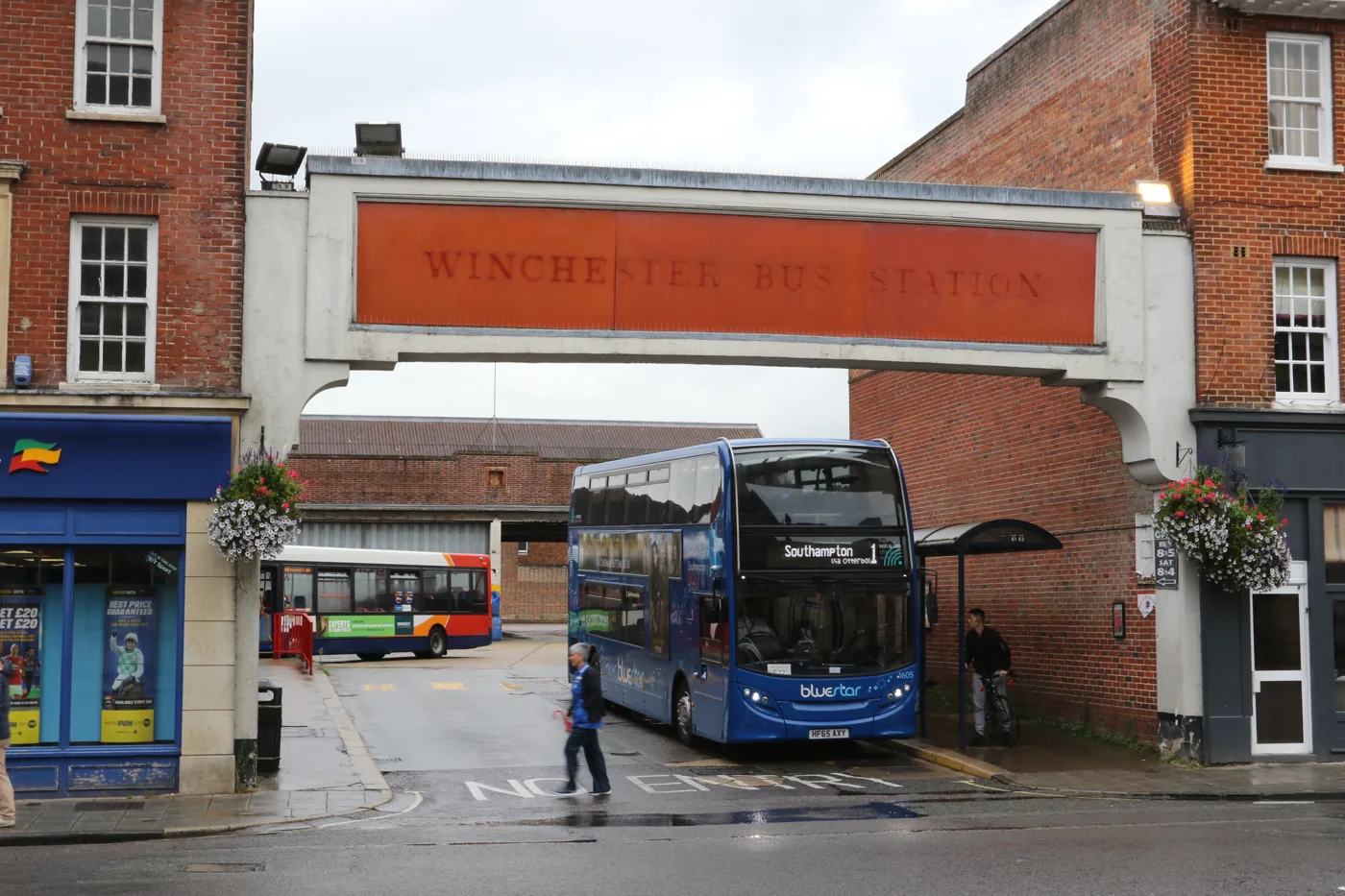

The 232-home city centre scheme carries no affordable housing at all, and the forecast £3.4m land receipt has gone. Cabinet approved it on 25 August.
Winchester City Council’s Cabinet has cleared its development partner to submit a planning application for the Central Winchester Regeneration scheme. The council’s own report says the 232-home scheme contains no affordable housing at all.
The decision was taken on 25 August and published the same day. It comes into force on 3 September if nobody calls it in, and the deadline to do that is 2 September (decision 1492). As of 31 August the call-in count stood at zero.
The council’s news release the same day described the scheme as delivering “over 200 new homes, over 3500 square metres of commercial space and 6,600 square metres of new public squares, streets and routes” (Winchester City Council). It did not mention affordable housing, the loss of the council’s forecast capital receipt, or the compulsory purchase powers Cabinet reserved on the same evening. All three are in report CAB3570, the paper Cabinet actually voted on (CAB3570, Central Winchester Regeneration updated business case).
What the scheme is
The application Jigsaw, formally Partnerships and Places LLP, intends to lodge covers:
- 232 homes, 17,885 square metres of residential floorspace
- 3,619 square metres of commercial floorspace
- 6,600 square metres of new public squares, streets and routes
- 1,275 square metres of children’s play space
- a new Woolstapler’s Square, and the opening up of the Abbey Mill Stream as a public realm feature
- retention and reuse of Kings Walk and the Antiques Market, both of which the 2021 plan assumed would be demolished
- 64 new trees, 587 cycle parking spaces, and a largely car-free layout
Phase 1 is the land bordered by Middle Brook Street, Friarsgate, Tanner Street and Silver Hill. Phase 2 is the bus station, Coitbury House and the demolished former Friarsgate Medical Centre site. The council has to hand over Phase 1 with vacant possession from late 2027.
No affordable homes
The 2021 outline business case set six objectives for the site. One of them was “Live”. The updated business case reports that objective has slipped.
the scheme does not currently provide any affordable housing, reflecting viability constraints identified through the development process
Officers say they explored options, including the council building affordable homes on the site itself, but “there is no subsidy available that could make that work financially for the Housing Revenue Account”. The report calls affordable provision an aspiration that both parties will keep pursuing, particularly if grant funding can be found.
It also flags what that means for the planning application, which the council will decide in its separate role as local planning authority: “securing planning permission remains a key risk, particularly in relation to the absence of affordable housing within the current proposals.”
A boutique hotel, the vehicle for the scheme’s overnight tourism objective, was explored and found not to be commercially viable. It has gone too.
The money has moved a long way since 2021
The outline business case forecast a £3.4 million capital receipt for the council. The current financial model generates no residual land value at all, so there is no receipt and no money to buy a replacement income-producing asset.
That matters because the council currently takes about £650,000 a year in net income from the Kings Walk, Middle Brook Street and bus station assets inside the scheme boundary. Jigsaw is not proposing to hand over any income-generating assets in return. The report sets out how the income disappears as the phases come forward.
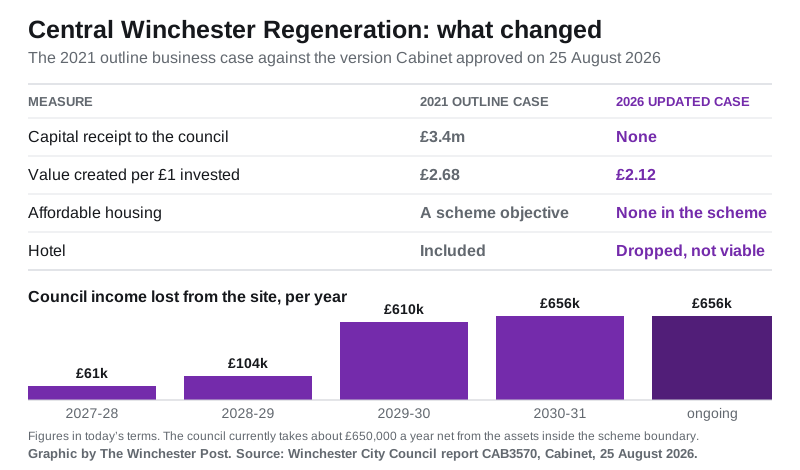
The report says most of that lost income is already built into the council’s budgets, and that going without a replacement is affordable in the context of its medium-term financial strategy.
The benefit-cost ratio has fallen as well. In 2021 the council put it at £2.68 of economic and social value for every £1 invested. The updated appraisal puts it at £2.12, a drop the report attributes largely to the absence of affordable housing.
There is one further liability sitting in the background. When the council bought the former Friarsgate Medical Centre in 2018 it signed a deed of overage running 15 years from 13 December 2018, charging £50 a square foot, indexed to RPI, on development above 30,741 square feet. The current plans come to 36,102 square feet. Triggered today that would cost around £390,000 plus stamp duty; the report’s own estimate for a later trigger is up to £500,000 plus £25,000 of stamp duty. If the trigger comes after 13 December 2033 it is not payable at all.
The M&S car park, and the threat behind it
To fit the replacement bus stops and stands into the city centre street network, the council needs the land currently leased to Marks and Spencer as a car park in Tanner Street.
Cabinet approved a capital budget of up to £450,000, funded by borrowing, to buy out the lease, including stamp duty and fees. Financing that costs an estimated £30,000 a year for 50 years. M&S has agreed to a joint valuation, which the report describes as a positive approach.
Cabinet also resolved that if the negotiation fails, it will use compulsory purchase powers and authorised officers to start the preparatory work for an order. The report is blunt about why: the recommendation “is simply a procedural one to ensure that the Council cannot be held to ransom”. Jigsaw will not need the land until around 2029, and it stays in use as a car park until then.
The bus infrastructure has its own funding gap. Jigsaw is putting in more than £1.5 million, which the report says cannot deliver the quality of stops, stands and public realm the council originally envisaged. Talks with Hampshire County Council about Bus Service Improvement Plan money continue, with no commitment secured.
Could Cabinet have said no?
The report addresses that directly, and the answer is not really. Officers write that after 18 months of design development “it would be difficult to justify refusing approval for submission of the planning application”, and that doing so could let Jigsaw claim the council is in default of the development agreement signed on 22 April 2024.
The options section goes further. It accepts there is an arguable case for refusal, given that affordable housing was a key procurement objective and remains a planning policy requirement. It then says a no-fault withdrawal is no longer realistic, that Jigsaw has invested several million pounds, and that the council would likely face a claim for those costs.
Cabinet’s approval is as landowner. The council stresses that this does not bind it as local planning authority, which will assess the application separately, including an independent test of the viability case for having no affordable homes.
What it means for you
- The bus station keeps running for now. The council has to give Jigsaw vacant possession of Phase 1 from late 2027, and the bus station sits in Phase 2. Replacement on-street stops and stands are part of the planning application.
- The M&S car park in Tanner Street stays open until roughly 2029 on the report’s own timetable, whatever happens with the lease.
- The real chance to comment is the planning application, not this decision. Jigsaw’s own target is late autumn. The council’s news release says by the end of the year, while the report refers in one place to submission in October. Under the development agreement the deadline is March 2027.
- If you want to object or support, watch the planning register. Our Winchester planning news page explains how applications are published and how long you get to comment.
- Call-in closes on 2 September. Any councillor who wants the decision reviewed by Scrutiny has until that date; after it, the decision takes effect on 3 September.
Have your say